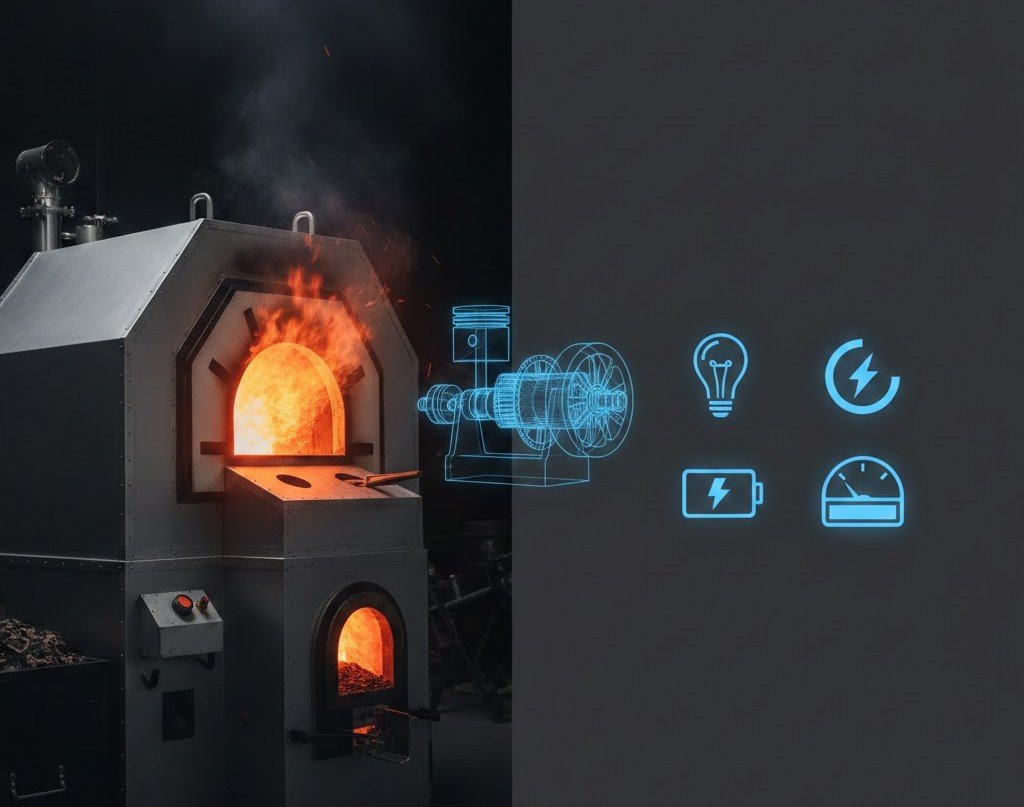
5 WAYS TO TURN BIOCHAR HEAT INTO ELECTRICITY

5 Ways to Turn Biochar Heat into Electricity

Waste Heat to Energy: 5 Systems to Generate Electricity from Biochar Making

Biochar production generates significant thermal energy. In most small and medium systems, that heat is wasted.

At WasteFree23, we focus on value retention. Heat can be converted into electricity to:

  • Power grinders, blowers, pelletizers
  • Charge batteries for night operation
  • Run lighting, fans, monitoring systems
  • Support micro-recycling centers (MRCs)

Below are five practical pathways to convert biochar heat into usable electricity.

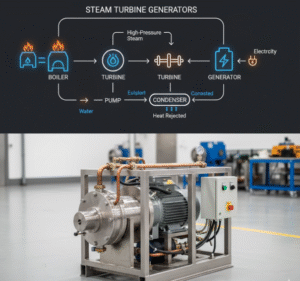
1. Steam to Turbine (Rankine Cycle – Heat → Steam → Turbine → Generator)

Steam Turbine Generators (Rankine Cycle)

The established method for large-scale power generation, scaled down for biochar operations.

How It Works: Biochar kiln heat boils water, creating high-pressure steam. This steam spins a turbine, which in turn drives an electrical generator. The steam is then condensed back into water and recycled, completing the Rankine thermodynamic cycle. This is the same principle as conventional thermal power plants, adapted for smaller, distributed systems.

🔧 Best Use Case:

  • Medium to large biochar kilns

  • Continuous operation

  • Industrial-level heat output

🛠 DIY / Build Resources:

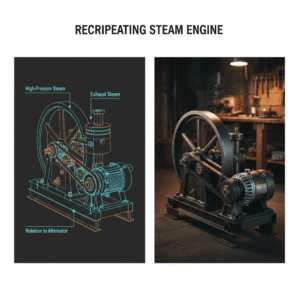
2. Steam → Reciprocating Steam Engine → Generator

A simpler, more mechanically robust alternative to turbines for smaller scales.

How It Works: Similar to the turbine, this system uses heat to produce steam. However, instead of spinning a turbine, the steam drives a piston within an engine cylinder. The reciprocating motion of the piston rotates a flywheel, which then drives an electrical generator. This is an older, often more mechanically forgiving technology compared to turbines at a small scale.

Steam to Engine (Reciprocating Piston Steam Engine)

Best Use Case:

  • Small to medium rural biochar operations
  • Lower budget setups
  • Environments where mechanical repair is more accessible than high-tech maintenance

🛠 Build Resources:

  • YouTube: Search “DIY steam engine generator build”

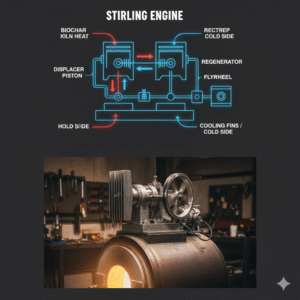
3. Heat to Stirling Engine

An external heat engine, ideal for capturing lower-grade biochar waste heat efficiently and safely.

How It Works: The Stirling engine operates on an external heat source, such as the exhaust heat from a biochar kiln. A sealed amount of gas inside the engine is alternately heated and cooled, causing it to expand and contract. This expansion and contraction drives pistons, generating rotational movement that can be coupled to an electrical generator. There is no direct combustion inside the engine, making it cleaner and safer than steam systems in many contexts.

Best Use Case:

  • Small-scale biochar units
  • Demonstration centers and educational projects
  • Off-grid rural setups needing reliable waste heat capture

🛠 DIY Resources:

Heat to Stirling Engine

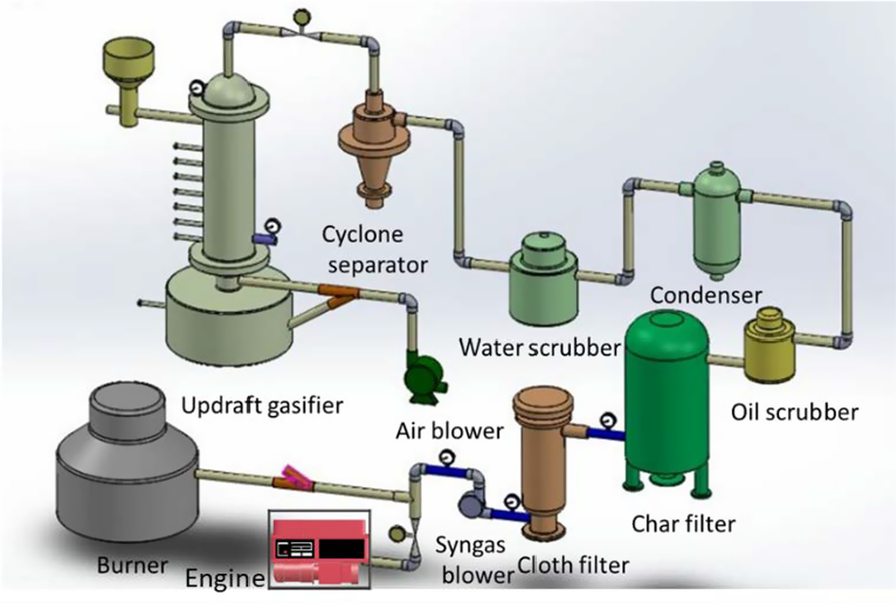
4. Biomass Gasifier → Internal Combustion Engine → Generator

How It Works

  1. Biomass heated in low-oxygen chamber.
  2. Produces syngas (CO, H₂, CH₄).
  3. Gas cleaned and cooled.
  4. Fed into internal combustion engine.
  5. Engine drives generator.

This integrates directly with charcoal/biochar production.


🔧 Best Use Case

  • Community-scale operations

  • Continuous biomass feedstock supply

  • Combined heat + power (CHP)

🛠 DIY Build Resources

  • Search: “DIY TLUD gasifier plans”
  • FEMA gasifier design manual (public domain PDF)
  • YouTube:
    “Small wood gasifier generator build”

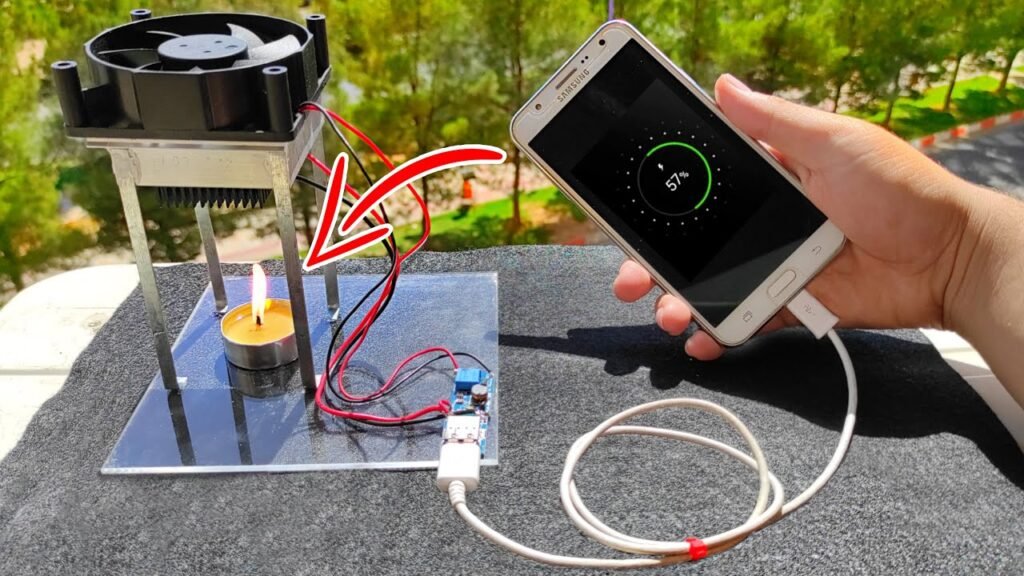
5. Thermoelectric Generators (TEGs) (Solid-State Heat to Electricity)

How It Works

Uses Seebeck effect:

  • Temperature difference creates voltage.
  • No moving parts.
Thermoelectric Generators (TEG)

🔧 Best Use Case

  • Small sensors
  • Charging batteries
  • IoT monitoring systems
  • Lighting

Not suitable for high power loads.


🛒 Where to Buy

🛠 DIY Resources

Search YouTube:

  • “DIY thermoelectric generator wood stove”
  • The following youtube video provides an honest, technical look at the Seebeck effect (TEGs) and what kind of real-world power output you can expect from clamping modules to a heat source.

Request Free Technical Support from WF23 at wastefree23@gmail.com
Check out our social media platforms below to connect.