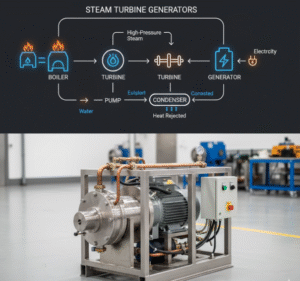
The established method for large-scale power generation, scaled down for biochar operations.
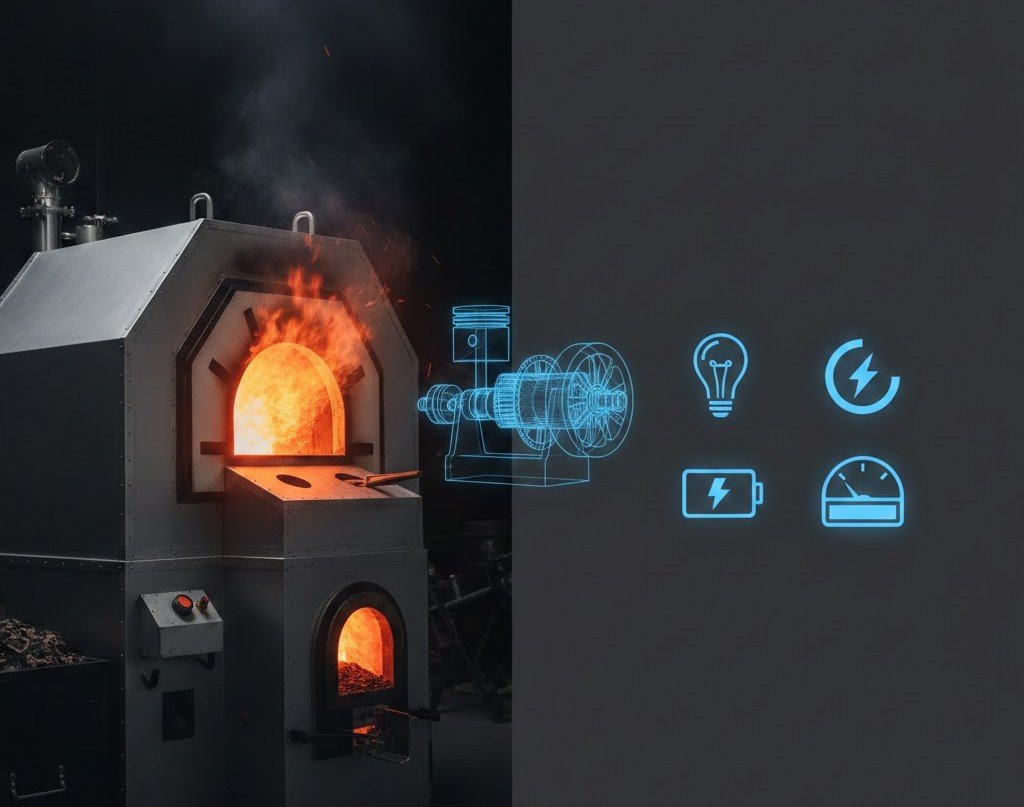
How It Works: Biochar kiln heat boils water, creating high-pressure steam. This steam spins a turbine, which in turn drives an electrical generator. The steam is then condensed back into water and recycled, completing the Rankine thermodynamic cycle. This is the same principle as conventional thermal power plants, adapted for smaller, distributed systems.
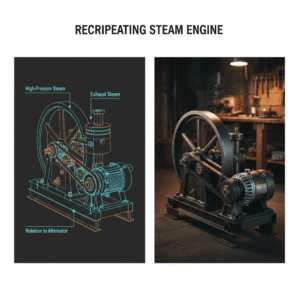
A simpler, more mechanically robust alternative to turbines for smaller scales.
How It Works: Similar to the turbine, this system uses heat to produce steam. However, instead of spinning a turbine, the steam drives a piston within an engine cylinder. The reciprocating motion of the piston rotates a flywheel, which then drives an electrical generator. This is an older, often more mechanically forgiving technology compared to turbines at a small scale.
Best Use Case:
Small to medium rural biochar operations
Lower budget setups
Environments where mechanical repair is more accessible than high-tech maintenance
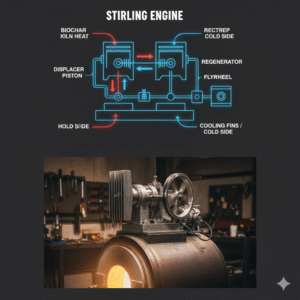
An external heat engine, ideal for capturing lower-grade biochar waste heat efficiently and safely.
How It Works: The Stirling engine operates on an external heat source, such as the exhaust heat from a biochar kiln. A sealed amount of gas inside the engine is alternately heated and cooled, causing it to expand and contract. This expansion and contraction drives pistons, generating rotational movement that can be coupled to an electrical generator. There is no direct combustion inside the engine, making it cleaner and safer than steam systems in many contexts.
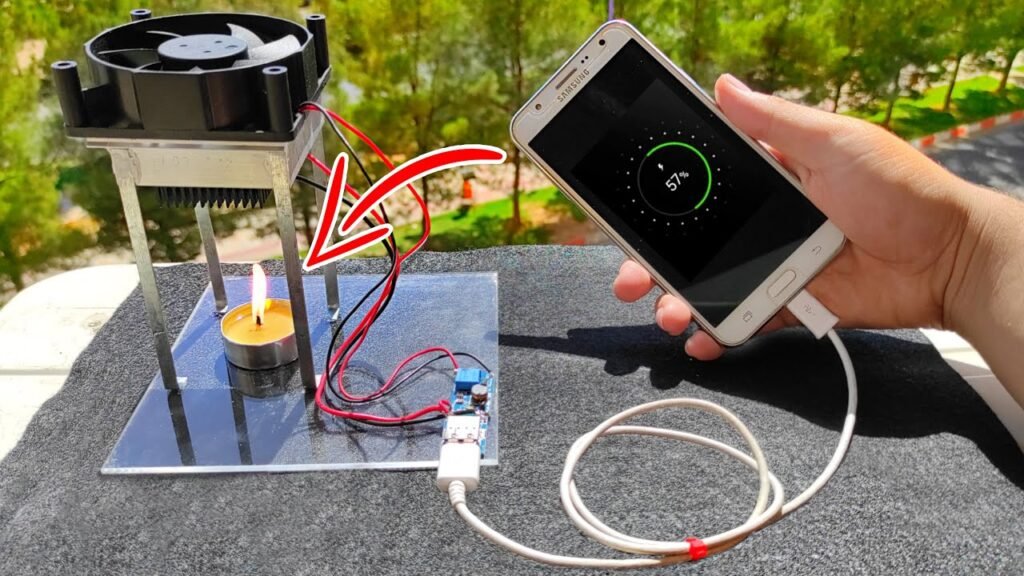
The following youtube video provides an honest, technical look at the Seebeck effect (TEGs) and what kind of real-world power output you can expect from clamping modules to a heat source.
Request Free Technical Support from WF23 at wastefree23@gmail.com