Biochar + Organic Waste Soil (Amazonian Dark Earth) for Faster Tree Growth and Land Restoration
Introduction: The Problem
In many parts of the world, especially in tropical regions, land becomes degraded after deforestation, farming, or overgrazing. This means the soil loses nutrients, organic matter, and important microorganisms. As a result:
- Crops grow poorly
- Trees struggle to survive
- Farmers need expensive fertilizers
- More forests are cut down to find better land
This creates a cycle of environmental damage and economic loss.
What Did This Study Test?
This study looked at a special type of soil made from biochar (charred biomass) mixed with organic waste. This type of soil is similar to what ancient Amazon communities created, often called “dark earth.”
Researchers tested whether adding a small amount of this soil could help trees grow better on degraded land.
They studied two types of trees:
- A fast-growing tree used for restoration
- A valuable timber tree
Importantly, they did not use any fertilizers.
Key Findings (Simple Explanation)
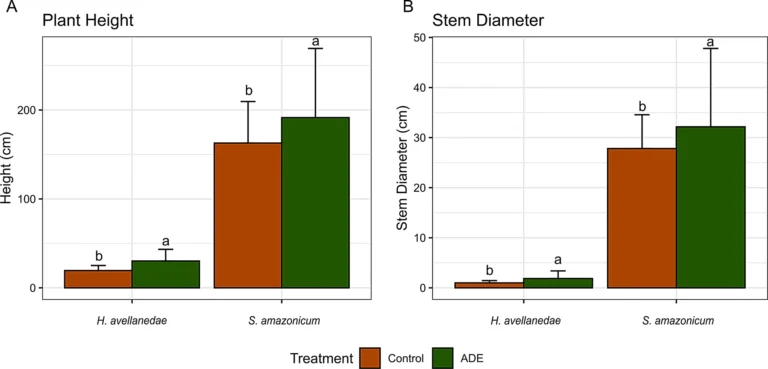
1. Trees Grew Much Faster
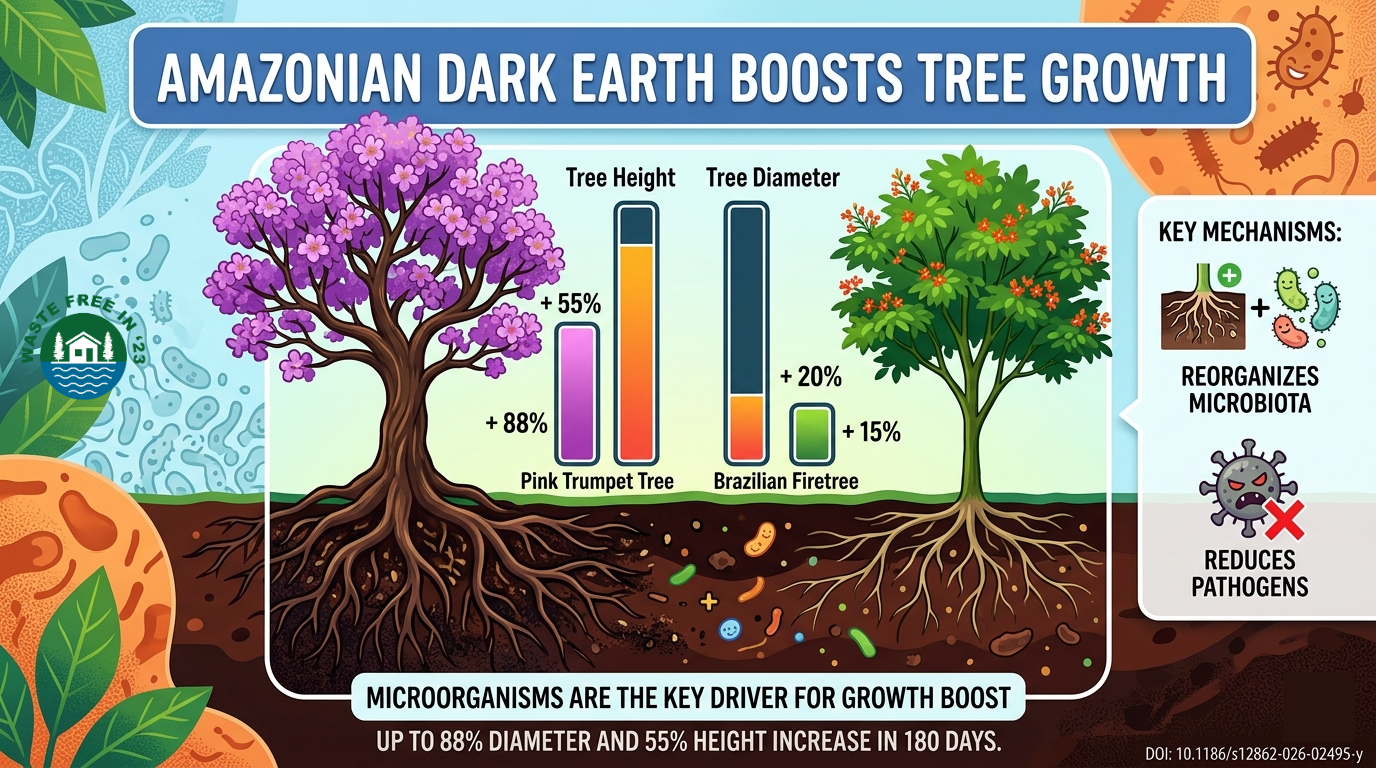
- Up to 55% taller
- Up to 88% thicker (stronger trunks)
Even with just a small amount of this soil. This means land can recover faster and more reliably with Amazonian Dark Earth (ADE).
2. The Real Power Is in Microbes (Not Just Nutrients)
Many people think soil works because of nutrients. But this study showed something more important:
- The biochar + organic waste soil changes the microbes in the soil
- It adds beneficial bacteria and fungi
- It reduces harmful pathogens
These microbes:
- Help plants absorb nutrients better
- Protect roots from disease
- Improve soil structure
In simple terms: It turns soil into a “living system” that supports plants.
3. Works Without Chemical Fertilizers
The trees grew well without added fertilizer. This reduces:
- Cost for farmers
- Dependence on imported fertilizers
- Environmental pollution from chemicals
Environmental Benefits
- Restores degraded land instead of clearing new forests
- Increases soil carbon (biochar stores carbon for long time)
- Improves biodiversity in soil (more microbes, healthier ecosystems)
- Reduces pollution by avoiding chemical fertilizers
- Supports reforestation and climate action
This is a strong tool for climate resilience and ecosystem recovery
Economic Benefits
- Lower farming costs (less fertilizer needed)
- Faster tree growth = faster income (timber, agroforestry)
- Restores unusable land into productive land
- Can be made from local waste materials (low-cost production)
- Creates jobs in biochar production and soil improvement
This turns waste into income and productivity
Why This Matters for WasteFree23
This research strongly supports a key idea:
Waste + biochar = powerful soil solution
Instead of:
- Burning waste
- Dumping organic material
We can:
- Convert waste into biochar
- Mix with organic matter
- Use it to rebuild soil and grow food or trees
Conclusion
This study shows that biochar combined with organic waste can transform poor soil into highly productive, living soil. It improves plant growth, reduces costs, restores land, and creates economic opportunities.
Got questions?