Home / How to Turn Everyday Cooking into Biochar and Organic Fertilizer
How to Turn Everyday Cooking into Biochar and Organic Fertilizer
How to Turn Everyday Cooking into Biochar and Organic Fertilizer
A simple system for households, communities, and cooperatives
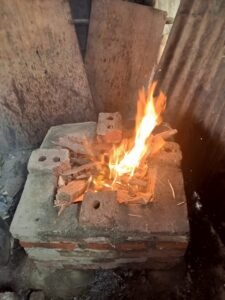
In Hawassa, Ethiopia, households are using improved brick stoves not just for cooking, but to produce biochar from daily fuel use. That biochar is then collected and turned into a valuable organic fertilizer using locally available materials like cow urine and manure.
This creates a complete system ➤ Cook food ➤ Collect charcoal ➤ Convert to biochar ➤ Make fertilizer ➤ Sell or use locally
The impact
Traditional cooking wastes fuel and produces smoke. At the same time, farms lack affordable soil inputs.
This system solves both.
✦ Less smoke and ✦ healthier kitchens ✦ Less firewood used ✦ Waste charcoal becomes a product ✦ Local fertilizer production ✦ Income opportunity for communities
Real impact at the household level
What you need to make it happen yourself
For the stove
Bricks (reused if possible)
Mud or mortar (can include biochar)
Basic stove design with airflow
For biochar collection
Metal or clay container
Daily collection routine
For fertilizer production
Biochar from stoves
Cow urine
Animal manure
Simple pit or container
Step 1: Build or use an improved brick stove
Use locally available bricks to build a simple stove that:
Burns efficiently
Produces less smoke
Leaves charcoal at the bottom
These stoves are already being built in Hawassa and used daily by households.
Step 2: Cook normally and produce charcoal
No change in behavior is needed.
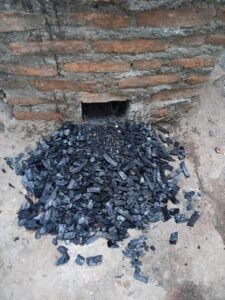
People cook as usual using firewood. After cooking, charcoal remains at the base of the stove.
This is your raw material.
Step 3: Collect charcoal regularly
Each day:
Remove the leftover charcoal
Store it in a dry container
In Hawassa, about 200 kg of charcoal waste per week is being collected from multiple households.
Step 4: Convert charcoal into biochar fertilizer
Mix the collected charcoal with:
Cow urine
Animal manure
Place the mixture in a pit or container and let it sit.
This process:
Charges the biochar with nutrients
Reduces odor
Stabilizes the material
Step 5: Prepare and use or sell
After mixing and resting:
Bag the material
Distribute to farmers
Apply directly to soil
In Hawassa:
About 100 kg of fertilizer is produced weekly
Labor cost is about 2000 birr per 100 kg
Step 6: Build a local system
This works best when organized: 1) Households cook 2) Collectors gather charcoal 3) Groups mix fertilizer 4) Farmers use or buy it. Ideal operator examples are cooperatives, community groups.
Key lessons from Hawassa
⁃ Start small but consistent
⁃ Daily collection matters more than scale
⁃ Demonstration builds trust before sales
⁃ Community ownership is critical
This must become a business, not a donation
Important notes
Farmers may take one season to see results before buying
Partnering with existing fertilizer sellers speeds adoption
Biochar can also be used in animal systems or compost