Step-by-Step Guide: Building a Plastic Shredder for Soft Plastics
(PE, PP Bags, Wrappers – Built in Hawassa, Ethiopia)
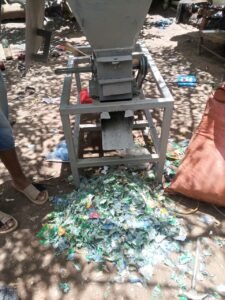
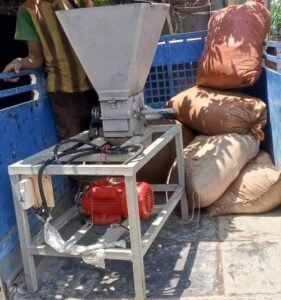
As part of the WasteFree23 initiative in Hawassa, Ethiopia – a plastic shredder is built and operating in Hawassa.
It is a locally fabricated, motorized unit designed specifically for soft plastics such as polythene bags, wrappers, and flexible packaging. The total build cost is approximately $600 including the motor. The machine is not intended for rigid plastics. It is optimized for the materials that dominate everyday waste streams – thin, flexible plastics that are difficult to process but widely available.
Where This Fits in the System
Plastic waste processing is not one machine.
This shredder fits into a simple local system:
Collection → Cleaning → Shredding → Heat Press → Molding → Products
It converts low-value, bulky plastic into consistent, process-ready material.
STEP 1: Understand What This Machine Processes
This shredder is designed for:
• PE (LDPE, HDPE films)
• PP bags and wrappers
• Flexible packaging
Avoid:
• PET bottles
• Thick rigid plastics
• Hard molded items
This is intentional. The machine is optimized for what communities actually have in large volume.
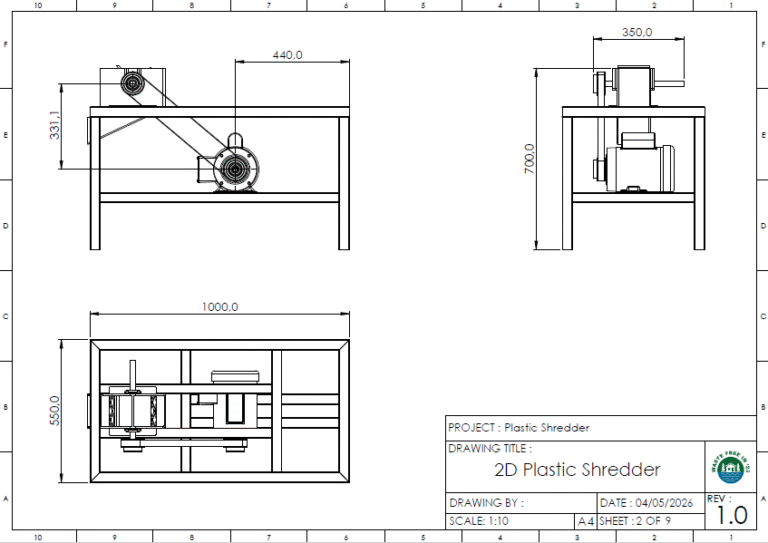
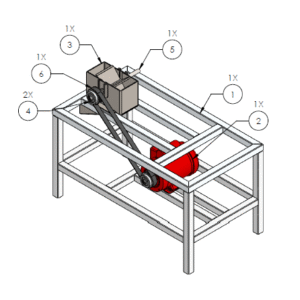
STEP 2: Main Components Overview
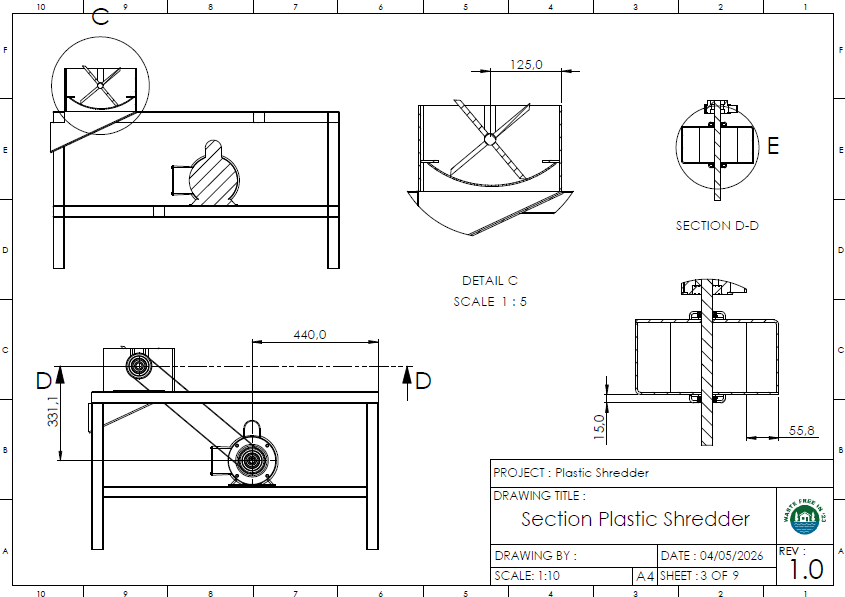
The machine consists of:
• Feed hopper
• Shredding chamber
• Shaft with Crusher Plates (4X)
• Bearings and housing
• Belt-driven motor system
• Steel support frame
This is intentional. The machine is optimized for what communities actually have in large volume.
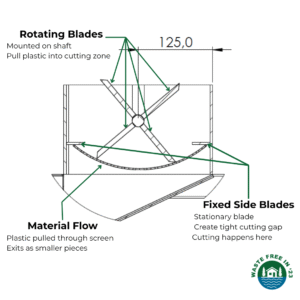
STEP 3: The Shredding Core
This is where the shredding happens.
Rotating Blades
Mounted on shaft
Pull plastic into cutting zone
Fixed Side Blades
Stationary blades
Create tight cutting gap
Shear Zone
Plastic passes between blades
Cutting happens here
Material Flow
Plastic is pulled in
Exits as smaller pieces
STEP 4: Power System
The machine uses:
• Electric motor
• Belt and pulley system
Function:
• Transfers motion to shaft
• Absorbs load
• Keeps system simple and repairable
STEP 5: Structure and Build
• Built using standard steel sections
• Designed for local fabrication
• Stable during operation
This base part can be built by local welders with basic tools.
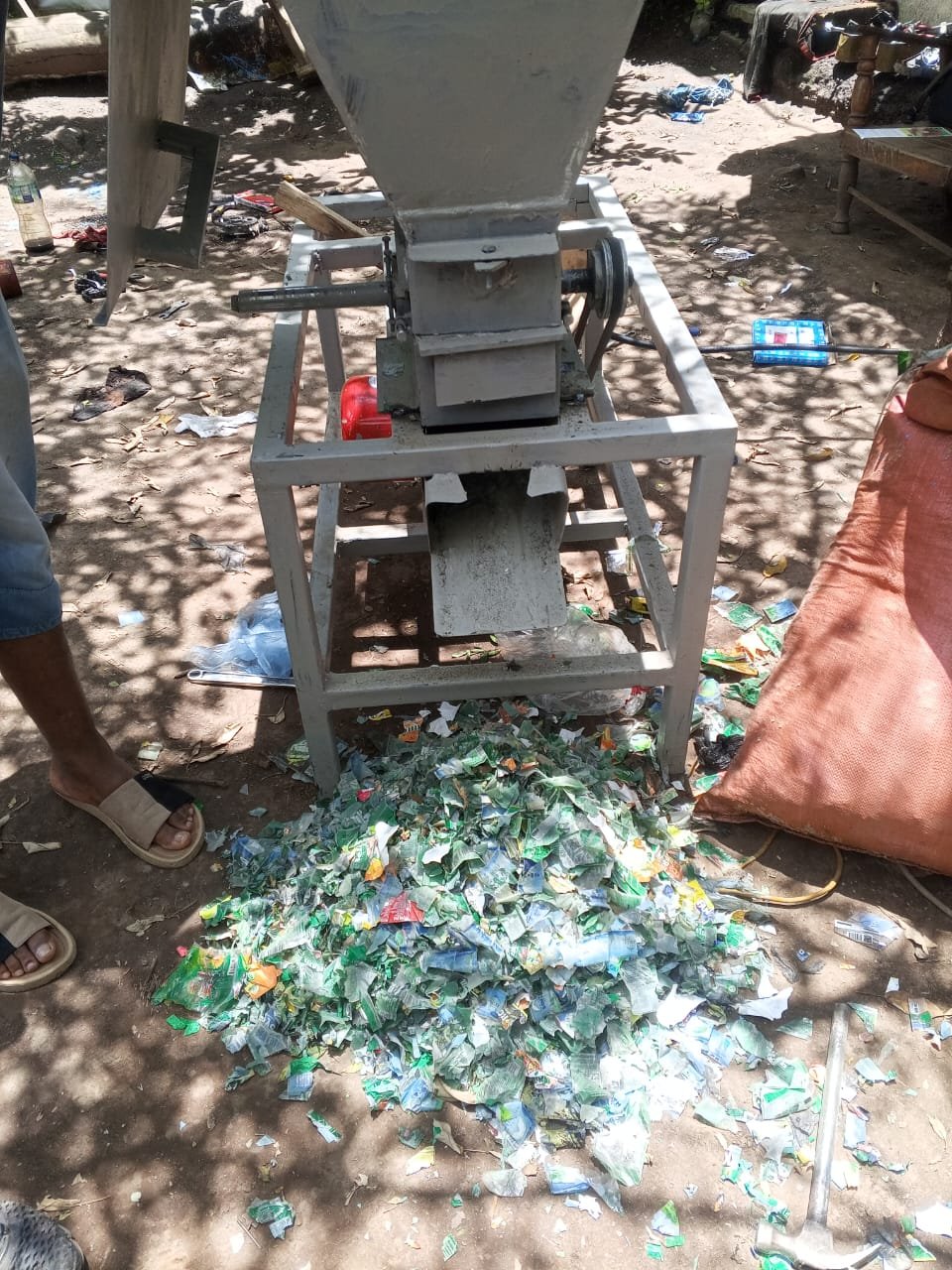
STEP 6: Live Operation
The process:
• Feed plastic through hopper
• Material engages with plates
• Shredded plastic exits below
Output:
• Reduced volume
• Uniform pieces
• Easier handling and processing
STEP 7: Output and Use
Shredded material can be used for:
• Heat pressing into panels
• Molding into products
• Feeding into micro-recycling systems
Cost and Build Context
• Approximate cost: $600 (including motor)
• Built locally in Hawassa
• Uses standard materials and components
👉 Accessible for small workshops and community-scale operations.
Full Mechanical Drawings and BOM
Practical Notes
• Works best with soft plastics only
• Avoid overfeeding
• Clean material improves performance
• Plates should be checked regularly
Why This Works
This machine enables:
• Local plastic processing instead of transport
• Reduction in waste volume
• Creation of usable raw material
• Local fabrication and repair work
It is a practical component of decentralized recycling systems.
Next Steps
If you build or adapt this machine: share your results. Improve the design. Help others replicate. For more details or implementation support, contact us at wastefree23@gmail.com
• Combine with heat press systems
• Integrate into Micro Recycling Centers
• Test with local waste streams