Home / How a Fish Market in Hawassa Turned Plastic Waste into Roof Panels
How a Fish Market in Hawassa Turned Plastic Waste into Roof Panels
How a Fish Market in Hawassa Turned Plastic Waste into Roof Panels
At the largest fish market in Hawassa, Ethiopia, plastic waste was not just a pollution problem. It was a missed resource.
With the rainy season approaching and roof damage becoming urgent, a simple, locally built heat press system was used to convert discarded polythene plastic into durable roof panels.
No factory. No complex machinery. Just local materials, basic tools, and practical thinking.
Before placing any plastic: Apply a thin layer of oil on the metal mold surfaces. This prevents the plastic from sticking and allows easy removal after pressing.
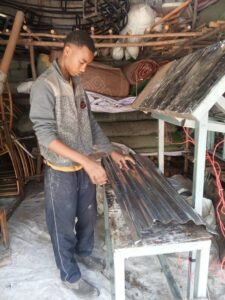
STEP 1 – Place the Base Metal Mold
Place the bottom metal roof mold into the heat press frame.
Make sure it is stable and aligned properly before adding material.
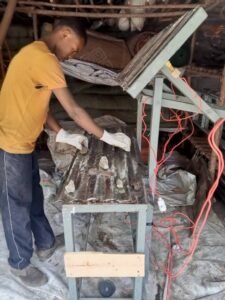
STEP 2 – Layer the plastics
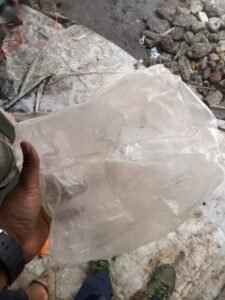
Place polythene plastic evenly inside the mold.
Build up approximately 5 layers, from bottom to top.
Key point:
Keep layers even
Avoid large gaps or uneven thickness
STEP 3 – Place The Top Mold
Position the top metal panel over the layered plastic.
This creates the full mold structure that will shape the final roof panel.
STEP 4 – Start Heating From Below
Switch on the bottom heat press only. This allows the plastic to melt gradually from the base upward.
Why this matters:
Prevents burning
Ensures even melting
Improves final panel strength
STEP 5 – Apply Pressure
As the plastic softens, apply pressure from the top press.
This compresses the material and removes air gaps.
Result:
Stronger panel
Uniform thickness
STEP 6 – Switch Heat To The Top
Turn off the bottom heating.
Switch on the top heat press.
This finalizes the melting and ensures the top surface is properly formed.
STEP 7 – Cool And Remove
Turn off all heating.
Carefully remove the pressed panel and allow it to cool.
Once cooled:
Remove the metal molds
Inspect the panel
FINAL RESULT
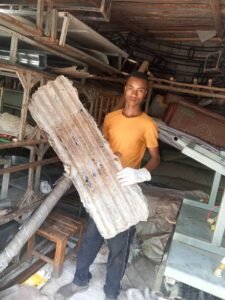
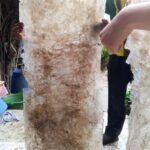
The result is a solid, usable plastic roof panel made entirely from waste.
These panels are now being used locally to repair roofs and can also be used for:
Shelters
Storage structures
Market infrastructure
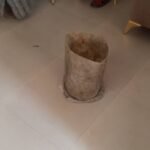
Except roofs they also made plastic panels and trash bins.
CONCLUSION
This system works because it uses local waste, simple tools, and can be built and operated by the community itself. It solves immediate infrastructure needs while creating real value.
With proper training, it can be replicated quickly across markets, waste centers, and community workshops.
This is not just recycling. This is turning waste into infrastructure where it is needed most.